
Uncle's Plumbing provides home re-piping in Kennedale, Arlington, Fort Worth, and nearby communities. We evaluate the condition of your water-supply pipes, explain the difference between targeted repairs and broader replacement, and provide upfront pricing before you approve the work.
Concerned about aging pipes? Call Uncle's Plumbing at (817) 743-3113 to discuss a re-piping evaluation.
What Is Whole-Home Re-Piping?
Whole-home re-piping means replacing most or all of the hot- and cold-water supply pipes inside a house. These pipes carry water to sinks, showers, toilets, washing machines, and other fixtures. Sometimes only certain branches need replacement.
Re-piping is different from clearing a drain or replacing an underground sewer pipe. It also differs from repairing the water service line between the meter and your home.
Signs Your Home May Need Re-Piping
Leaks Keep Appearing in Different Places
One failed fitting might need only a localized repair. Repeated leaks along separate sections of aging pipe suggest a larger problem. Repeated repairs can justify reviewing the entire system.
Water Pressure Is Consistently Low
Corrosion and mineral deposits can restrict flow through older piping. However, low pressure can also result from a partially closed valve, a faulty pressure regulator, a fixture problem, or the municipal supply. The cause should be identified before deciding to replace pipes.
Your Home Has Aging Galvanized or Polybutylene Pipes
Galvanized steel pipes can corrode and accumulate deposits over time. Polybutylene supply piping has a history of failures and can warrant closer evaluation, especially when leaks have occurred. Pipe material is an important consideration when planning repairs.
For concerns about lead in water, contact your utility and consider testing. Pipe color or water taste cannot establish lead levels.
You Have Repeated Leaks Beneath a Concrete Slab
A leak beneath the foundation may be addressed with a targeted repair or a rerouted line. Multiple failures may justify evaluating a broader replacement strategy. See our slab leak repair service for the options involved in those situations.
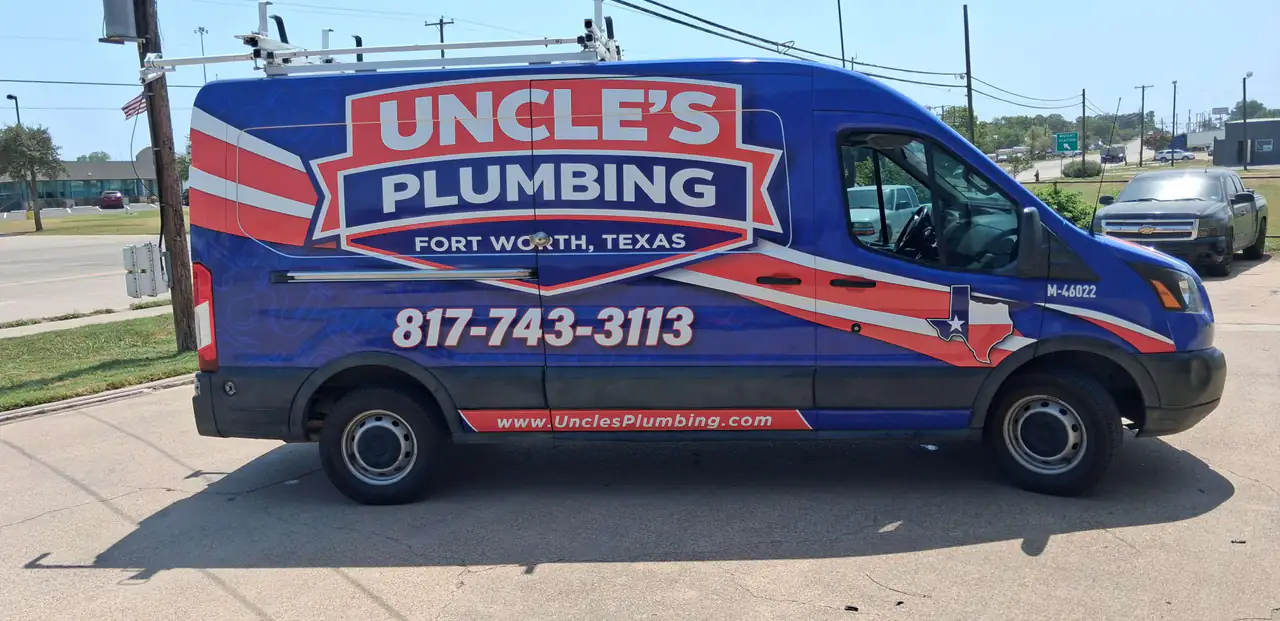
One of our vans, wrapped with the license number and the phone number. This is what pulls up outside.
Re-Piping or Repairing One Pipe: Which Makes Sense?
A complete re-pipe is not automatically the best answer to a broken pipe. When damage is isolated and nearby piping is in good condition, repairing a connection or replacing a short section may be sufficient.
Broader replacement becomes more reasonable when pipes have recurring failures, severe deterioration, or multiple hard-to-access problem areas. Consider repair frequency, pipe material, and the access required for future work.
For a sudden isolated leak, our burst pipe repair service may be more appropriate. If the leak's source is unclear, leak detection can help determine where to investigate before choosing a repair.
PEX vs. Copper for Home Re-Piping
Two common materials for replacement water-supply piping are PEX and copper. Each has advantages, limitations, and installation requirements. We can discuss materials appropriate to your property and applicable plumbing codes.
PEX Water-Supply Piping
PEX is flexible plastic piping approved for many residential water-supply applications. Its flexibility can allow longer runs with fewer directional fittings, which may help when routing new lines through certain spaces. Temperature, exposure, and manufacturer requirements still matter.
Copper Water-Supply Piping
Copper is rigid metal piping with a long history of use in residential plumbing. It may be suitable for certain exposed locations or installations where its characteristics are beneficial. Costs, water chemistry, and joining methods matter.
Neither material is automatically the best choice for every house. Pipe sizing, route, water conditions, code requirements, and budget should guide the recommendation rather than a blanket claim that one always lasts longer.
What Happens During a Home Re-Piping Project?
1. Inspect the Existing Plumbing
We'll ask about recurring leaks, pressure problems, previous repairs, and the home's pipe materials. Accessible piping and fixture locations help determine what can be evaluated before walls or ceilings are opened.
2. Plan the Replacement Routes
A re-pipe involves deciding how new hot- and cold-water lines will reach the fixtures. Some locations have accessible attic or wall routes; others require opening finished surfaces. We'll discuss expected access points, temporary water interruptions, and any permit or inspection requirements that apply.
3. Explain the Scope and Upfront Price
The proposal should identify the lines, materials, and included work. Ask about wall openings, patching, paint, fixture connections, and permits, including which tasks may require another contractor.
4. Install and Check the New Piping
After the work is approved, new water-supply piping can be installed along the agreed routes. Connections and lines are checked as required before normal operation resumes. Water may need to be shut off during parts of the project, and the schedule depends on access, size, and complexity.
5. Review the Completed Work
We'll explain the work performed and any remaining finish repairs or related concerns. The objective is a functioning water-supply system and a clear understanding of what was replaced, not a promise that plumbing will never need maintenance again.
How Much Does Whole-Home Re-Piping Cost?
The cost depends on the number of bathrooms and fixtures, home's size and layout, pipe material, accessibility, and amount of piping being replaced. Accessible routes may reduce labor compared with opening finished walls.
The scope may also include permits, inspections, fixture connections, and work to restore ceilings or walls. An accurate estimate should make these items clear rather than relying on a universal price per home.
Uncle's Plumbing provides upfront pricing for the proposed work. Call (817) 743-3113 to discuss an evaluation and estimate options.
Will Re-Piping Improve Water Pressure or Water Quality?
Replacing severely restricted water-supply pipes may improve flow at affected fixtures, but the result depends on the true cause of the pressure problem. If the issue comes from the utility supply, pressure regulator, or a clogged fixture aerator, replacing interior pipes may not solve it.
New pipes may eliminate corrosion or deposits from the sections that are replaced. That does not guarantee a change in the taste, appearance, or safety of drinking water. If water quality is a concern, contact your water utility and consider appropriate testing. EPA guidance notes that galvanized pipes can retain lead particles in some circumstances, so older plumbing should be evaluated thoughtfully.
Why Choose Uncle's Plumbing for Re-Piping?
Uncle's Plumbing is a locally owned company founded by Andy Boyd, who has worked in the plumbing trade since 1998. His background includes residential service, commercial construction, and supervising plumbing crews. Andy is a Texas Master Plumber, license M-46022.
We focus on practical options, understandable explanations, and upfront pricing before approved work begins. We serve Kennedale, Arlington, Fort Worth, Mansfield, Grand Prairie, North Richland Hills, and nearby communities. See our Service Areas page for additional locations.