
Uncle's Plumbing provides French drain installation in Kennedale, Arlington, Fort Worth, and nearby communities. We'll discuss where water gathers, evaluate the property's conditions, and explain whether a French drain is a suitable option. You receive upfront pricing before approved work begins.
Water pooling around your property? Call Uncle's Plumbing at (817) 743-3113 to discuss drainage options.
What Is a French Drain and How Does It Work?
A French drain is a gravel-filled trench that commonly contains a perforated pipe. Water moves through the surrounding soil and gravel into the trench, then travels along the pipe toward a suitable outlet. Filter fabric helps prevent soil from filling the spaces between stones.
The route and outlet are just as important as the pipe. A properly planned system must account for slope, soil conditions, the amount of water entering the area, and where that water can go without creating another problem.
French drains are often used to intercept shallow subsurface water. They may help with soggy areas, seepage along a slope, or persistent moisture in part of a yard. They are not a guaranteed solution for major flooding, a high water table, or problems caused by an active plumbing leak.
Signs You May Need a French Drain
Your yard stays soggy after rain
When one section remains soft and wet long after nearby areas dry, water may be moving slowly through the soil. A French drain may help intercept that moisture if the property has a suitable path for discharge. The amount of rainfall, local grading, and soil permeability all affect the recommendation.
Water collects beside a building
Repeatedly saturated soil near a foundation deserves attention. Depending on the source, a French drain, grading changes, or another drainage method may help redirect water. Drainage work should not be presented as a substitute for evaluating existing structural foundation damage.
Water seeps downhill into a low area
Properties with sloped lawns can experience water moving toward patios, walkways, or low spots. A properly placed drain may intercept shallow water before it reaches the problem area. Large volumes of fast-moving surface runoff may instead require a swale, surface inlet, or other solution.
Landscaping struggles in wet soil
Grass and plants may have trouble growing where roots remain waterlogged. Drainage improvements can sometimes reduce prolonged saturation. However, shade, compacted soil, irrigation leaks, and plant selection can also contribute, so identifying the source matters.
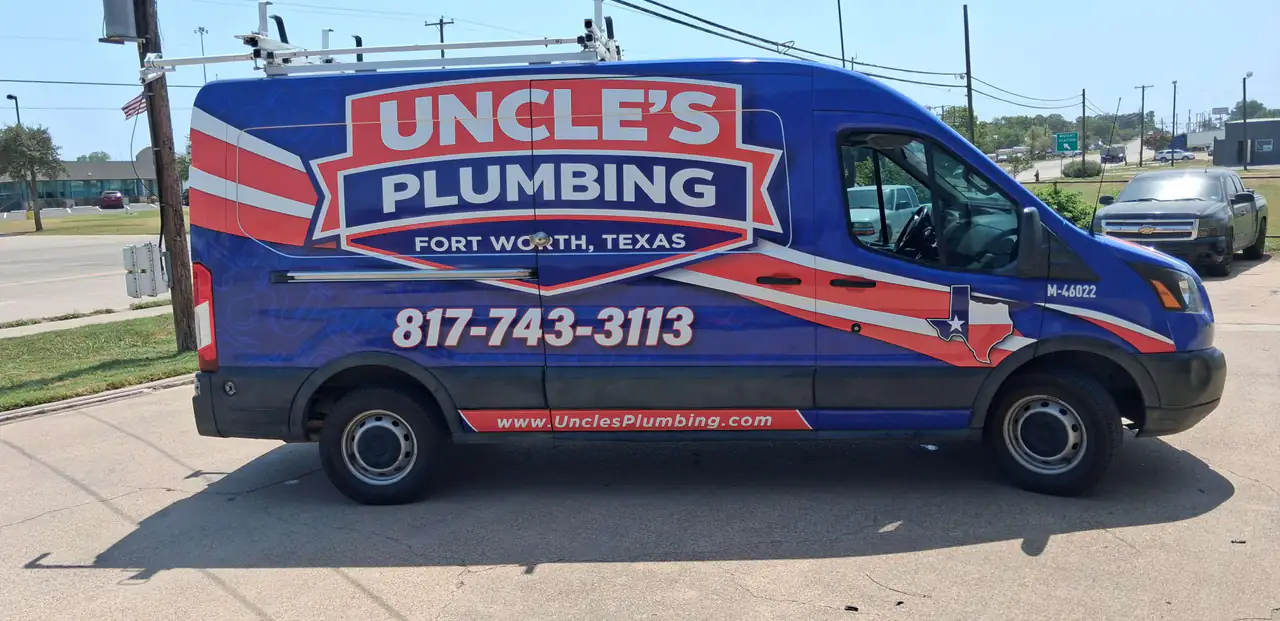
One of our vans, wrapped with the license number and the phone number. This is what pulls up outside.
Is a French Drain the Right Drainage Solution?
Not every puddle calls for a buried French drain. Water flowing across a driveway or collecting in a shallow surface depression may be better handled by regrading, a surface catch basin, or a channel drain. A downspout discharging next to the house may need a dedicated solid drainpipe routed to an acceptable outlet.
A French drain is generally better suited to collecting water that has entered the ground or is seeping through soil. A surface drain collects water at ground level. In some situations, a property needs a combination of approaches.
Before recommending installation, the source of the water should be considered. If wet ground persists in dry weather, an irrigation or water-line leak may be involved. Uncle's Plumbing also provides leak detection and water line repair when the evidence points to plumbing rather than rainfall.
How French Drain Installation Works
1. Evaluate the water and the property
We begin with the locations where water collects and the pattern you've noticed during or after rain. Ground slope, soil conditions, landscape features, and nearby structures affect the approach. We'll discuss whether subsurface drainage fits the problem and whether a different solution should be considered.
2. Plan a drainage route and outlet
A French drain needs a workable path for moving collected water. The proposed route should avoid directing runoff onto neighboring property or into an unauthorized connection. Drainage discharge rules and permit requirements can vary by municipality and project. An outlet must be appropriate for the site, not simply the closest low spot.
3. Prepare the excavation safely
Installation typically requires digging a trench, so buried utilities must be located before work begins. Texas811 advises contacting 811 at least two business days before excavation; private irrigation, lighting, and other privately owned lines may require separate locating. Trench depth and width depend on the drainage design rather than a universal measurement.
4. Install and finish the drainage system
A typical installation includes filter fabric, drainage stone, and perforated piping arranged to collect water and direct it along the planned route. The trench is then finished in a way suited to the landscaping and intended water entry. We'll explain what the proposed installation includes and what surface restoration may require separate work.
What Affects the Cost of French Drain Installation?
French drain pricing depends on the length and depth of the trench, soil conditions, accessibility, materials, and the location of the outlet. A short run across an accessible yard is different from excavation near established landscaping, hardscaping, or buried utilities.
The need for grading changes, additional inlets, utility locating, or specialist design can also affect the scope. Rather than quoting one price for every property, Uncle's Plumbing can discuss the site conditions and provide upfront pricing for the work proposed. Ask what's included in backfilling and restoring disturbed landscaping.
Can a French Drain Help Protect a Foundation?
Managing water that repeatedly collects near a foundation may reduce some moisture-related risks, but the right approach depends on the property. Gutters, downspouts, soil grading, and the final drainage outlet can matter as much as the French drain itself.
A drain cannot repair cracks or correct every condition that causes foundation movement. If you have structural concerns, water entering living areas, or significant erosion, a qualified drainage or foundation specialist may be needed as part of the evaluation. The goal is to address the actual source and route of the water instead of promising a universal fix.
Caring for Your French Drain
Keep visible outlets clear of leaves, sediment, and landscaping debris. Watch for new pooling in the original problem area after heavy rainfall. Avoid driving heavy equipment over a buried drain unless it was designed for that load.
French drains can lose effectiveness if their outlets become blocked or sediment accumulates inside the system. If drainage changes noticeably, have the area evaluated before assuming the pipe needs replacement. Routine attention to gutters and downspouts can also reduce water collecting in the wrong places.
Why Choose Uncle's Plumbing?
Uncle's Plumbing is a locally owned company serving Kennedale, Arlington, Fort Worth, Mansfield, and surrounding communities. Founder Andy Boyd has worked in plumbing since 1998, including construction and residential service work. He holds Texas Master Plumber license M-46022.
We focus on understandable recommendations and upfront pricing. For French drain projects, that means discussing the water problem, whether the proposed system fits the conditions, and where collected water will go. You can view our broader coverage on the Service Areas page.